Behind the Dress: Why Manufacturing Matters More Than Ever
We go behind the scenes of bridal gown manufacturing with Monica Loretti Bridal to explore what retailers should look for in a manufacturing partner - and why quality, consistency and service can make all the difference to the bride’s experience.


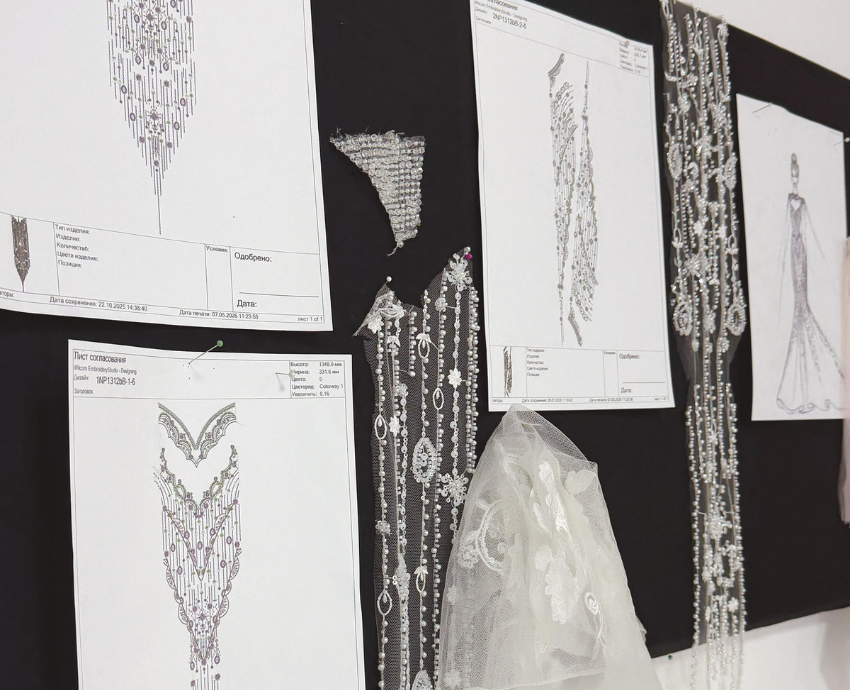
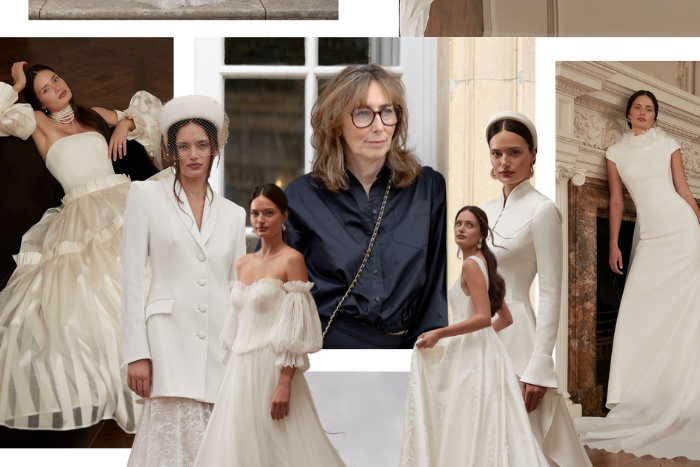
For bridal retailers, choosing a collection is about far more than finding beautiful gowns. Behind every sample on the rail is a complex manufacturing process that ultimately determines whether a boutique can confidently make promises to its brides. Alla Lokot of Monica Loretti offers a rare look behind the scenes at what it takes to turn an exceptional sample into a consistently exceptional product - from engineering gowns across an inclusive size range to managing customisation at scale, preserving craftsmanship and ensuring that the dress a bride receives months later is every bit the dress she fell in love with.
What a Boutique Is Really Buying When It Orders a Wedding Dress
When a boutique orders a wedding dress, it may look as though it is buying a design. In reality, it is buying something rather more complicated.
It is buying the confidence that the gown, which arrives months later, will be the gown its team remembers from the collection. That it will work in a different size. That a requested alteration will be understood correctly. That the construction will hold, the proportions will remain right and the details that made the sample special will still be there. A beautiful dress gets the order, but manufacturing has to keep the promise.
The sample is a promise
Creating one exceptional sample is not the hardest part of bridal manufacturing. The real test is making that dress again – and again – without gradually losing what made it exceptional in the first place. This matters because the sample has a rather unusual role in bridal.
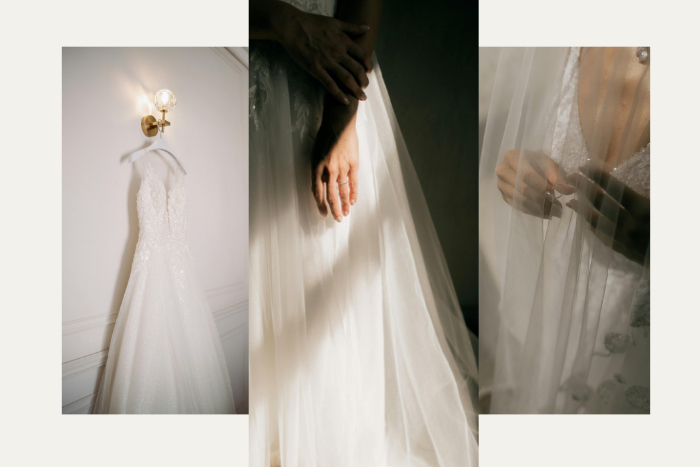
"It is not simply a showroom piece. A bride stands in front of a mirror wearing it, often months before her own gown will exist, and makes one of the most emotional purchases of her life. The sample is therefore a promise. When her gown eventually arrives, she expects the same silhouette, the same balance, the same feeling in the bodice and the same details she fell in love with."
For us, consistency does not mean that dresses should feel industrial or identical. It means that the 100th gown deserves the same attention as the first. That requires a great deal of work that nobody outside the production process will ever see: precise patterns and technical specifications, controlled materials, construction standards, production checks and people who understand exactly where a few millimetres can change the way a gown sits. For a boutique, this consistency is not merely a manufacturing metric. It protects the conversation it has already had with its bride.
A size 60 is not a size 38 made bigger
The same principle becomes considerably more complicated when we talk about size. At Monica Loretti, we produce gowns up to EU size 60, and experience has taught us that genuine size inclusivity is an engineering question as much as a design one. A larger gown cannot simply be a mathematically enlarged version of a smaller sample. As the body changes, the architecture of the dress has to respond. Bust support changes. Boning may need to work differently. Weight is distributed differently through the bodice and skirt. Necklines, straps and waist positions need reconsideration. Even decorative elements have to remain in proportion. The challenge is not to make the dress bigger. It is to make the same design work beautifully on a different body.
And, paradoxically, the better this work is done, the less visible it should be.
A bride should not feel that she is wearing an ‘adapted’ version of the gown she saw in a campaign or on the boutique rail. She should simply recognise the dress. Good grading is technically complex for us and visually invisible to her.
Scale should create consistency, not uniformity
There is sometimes an assumption in bridal that craftsmanship and scale sit at opposite ends of the spectrum: small means personal; large means mass production. We do not believe it is that simple. Our production operation covers around 8,000 square metres, with production in Ukraine and Poland. At this scale, structure becomes essential.
"Pattern makers, technologists, sample teams, production specialists and quality-control teams all have distinct roles, and a gown passes through many hands before it leaves us. But scale does not remove the human hand from bridalwear. Quite the opposite. Lace still has to sit correctly on a bodice. An appliqué cannot be placed simply because it fits the available space. Embellishment needs balance. A seam that is technically correct can still be visually wrong. These decisions require judgement, not just process."
Having our own lace production gives us another level of control, but technology and capacity are only useful when they support the final product. In fact, the larger a production operation becomes, the more seriously it has to take small details. A tiny mistake in one prototype is a mistake. A tiny mistake built into a production standard can become a hundred mistakes.
Scale, at its best, should make craftsmanship more dependable – not make the product less special.
Customisation is where the system is really tested
There is one area that tests this balance particularly well: customisation. Brides increasingly want to make a gown their own, and boutiques need manufacturers who can respond. It may be a different neckline, added sleeves, a more covered bodice, a change of lining, a modified skirt or one of the detachable elements that have become such an important part of modern bridalwear. For a small atelier making one gown at a time, individual changes are part of the natural process. Doing this within a large production operation is a different challenge altogether. A custom request cannot simply travel through the factory as a note saying, ‘please change this’. What sounds like a small request at boutique level may affect a pattern, construction, fabric consumption, lace placement, production instructions and final quality control. Every department involved needs to understand the same request in exactly the same way.
"This is where craftsmanship, communication and manufacturing discipline meet. The goal is an interesting contradiction: customisation should feel completely personal to the bride, while being handled extremely systematically by the manufacturer. Because individuality should never mean unpredictability."
More than the dress
Much of good manufacturing is invisible. Perhaps that is precisely the point. The bride does not need to know how many technical decisions were made to support her bust, how her pattern was developed, how her customisation moved through production or how many checks her gown passed before it reached the boutique. She only needs to put it on and recognise the dress she said yes to. And the retailer needs to be able to trust that moment. That is why, when a boutique orders a wedding dress, the dress itself is only half the product. The other half is the manufacturing behind it: the ability to reproduce it faithfully, engineer it across sizes, personalise it without losing control and deliver the same standard beyond the original sample. A beautiful sample may win a place on the boutique rail. Keeping its promise is what builds the partnership.
You may also like